通用部分
opss 在做类型推断时,会根据框架的内部实现,抓取每个 controller、service 的 入参、返回值,最终生成 openapi,而在这个过程中产生了一些使用 opss 时的开发约定。
生成规范
如果返回值中包含 enum、interface,哪怕是数据深层包含 enum、interface,opss 都会自动识别并生成对应的类型定义。 意味着你的请求参数、返回参数中,如果包含 enum、interface,那么你将会在 api 文档中获得实体类型,大概张这样:
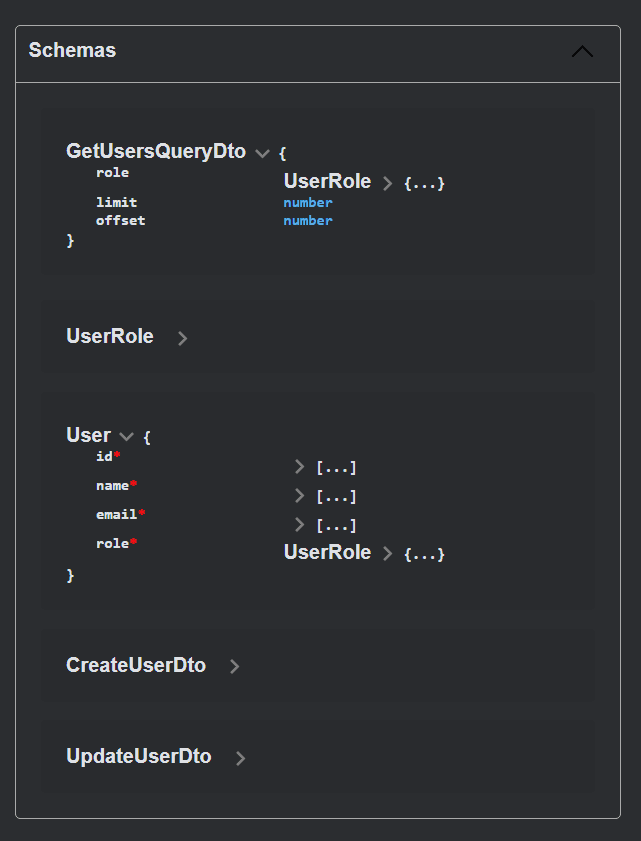
为什么 interface、enum 会被识别,而 type 不会?
- 因为 type 是泛指为用于计算的类型,或者无名称类型。
- 如果任何类型都建立实体则可能导致实体命名冲突。
服务命名
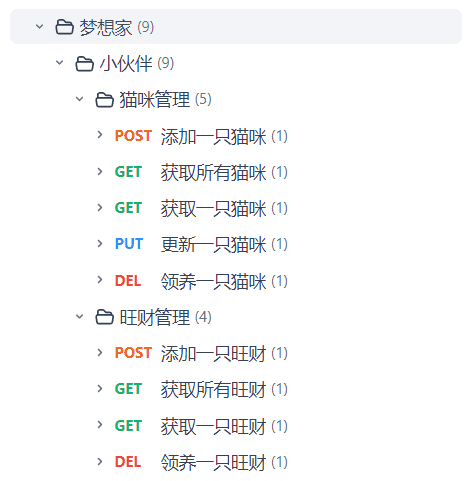
@summary 是针对于 controller、service、method 的命名,用于生成文档的标题,如果没有命名则采用 method + url 作为标题。
@tags 是表示 service、method 的目录深度,用于生成文档的目录,nestjs 的 method 可以直接从 controller 的 @tags 继承。
/**
 * @tags 梦想家/小伙伴
 *
 * @summary 旺财管理
 */
@Controller('dog')
export class DogController {
  constructor(private readonly dogService: DogService) {}

  /**
   * @summary 添加一只旺财
   */
  @Post()
  create(@Body() createDogDto: CreateDogDto) {
    return this.dogService.create(createDogDto);
  }
}
返回值
- code: 200 as const,返回的 code 或者 status 的返回值被定义为常量就是用来区分接口用例的,在用例中分别有 200、500 两个 code 的用例。如果返回中有 2 个相同的状态值,比如有 2 个 200,则可以通过对返回值 define 一个名称,来区分用例。
@Post('upload')
@UseInterceptors(FileInterceptor('file'))
async uploadFile(@UploadedFile() file: Express.Multer.File) {
  try {
    const uploadResult = await this.appService.uploadFile(file)
    return {
      success: true as const,
      code: 200 as const,
      message: 'File uploaded successfully',
      data: uploadResult,
    }
  }
  catch (error) {
    return {
      success: false as const,
      code: 500 as const,
      message: 'Failed to upload file',
      error: error.message,
    }
  }
}